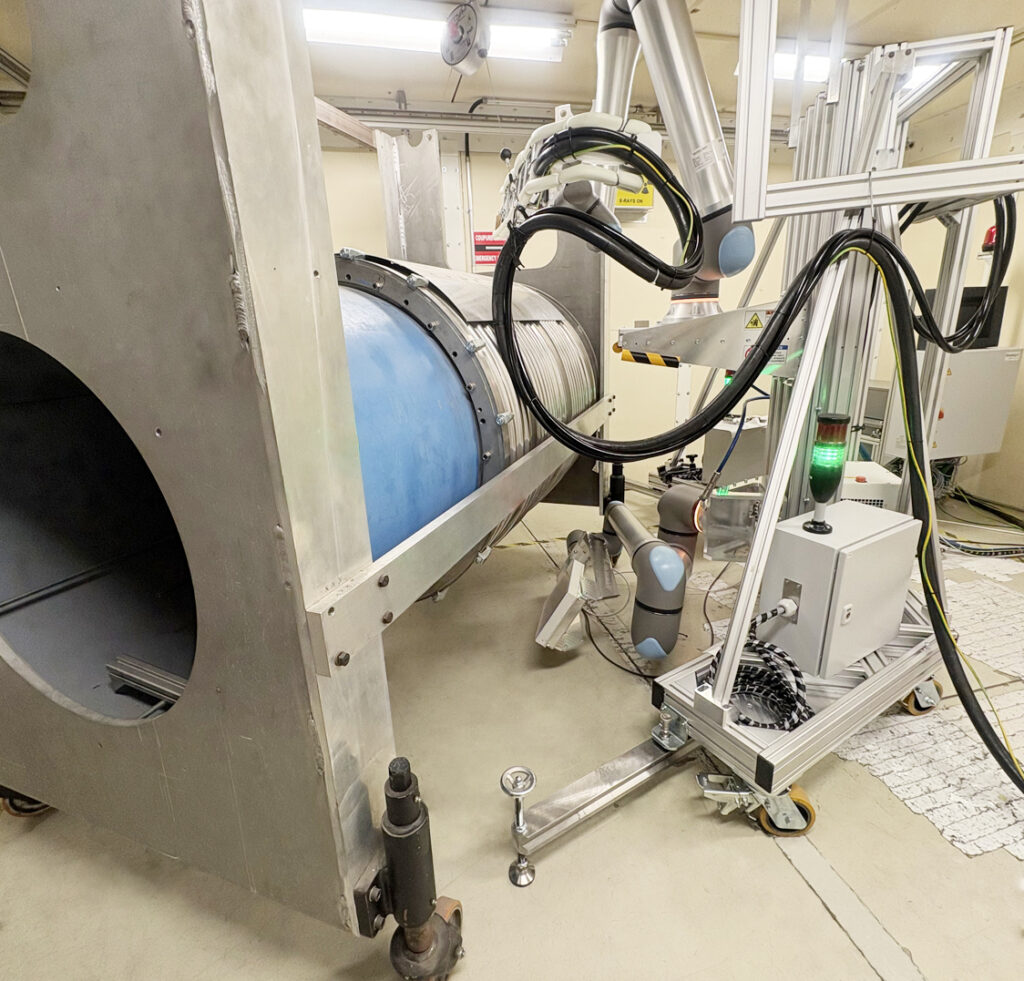
Tailored

Complex non-destructive evaluation

X-RAY
CT
UT
XRD
SURFACE PROFILING

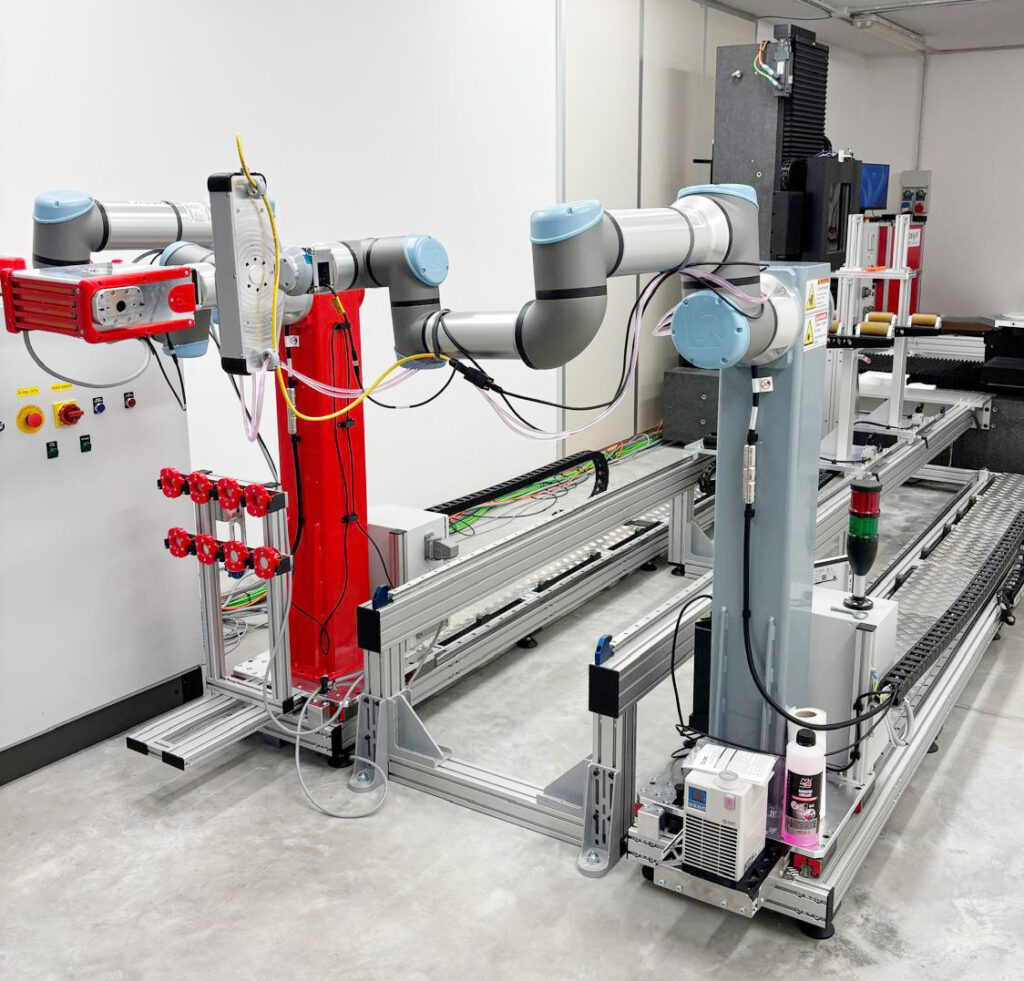
Portable laboratory

All-in-one inspection capabilities directly on site.

Infinity large objects

Inspecting objects beyond the limits of conventional inspection systems.

Cutting edge image quality

Revealing details others cannot see.

Combined methods

The power of multimodal inspection in a single solution.

Automation

Intelligent automation that accelerates every inspection.

Foreign objects detection

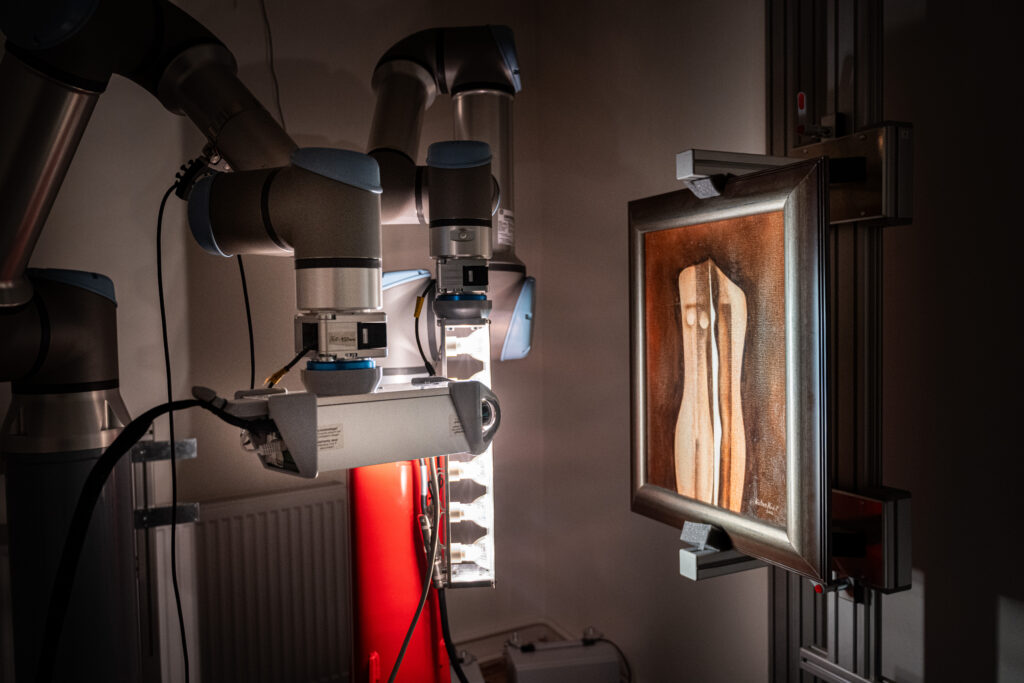
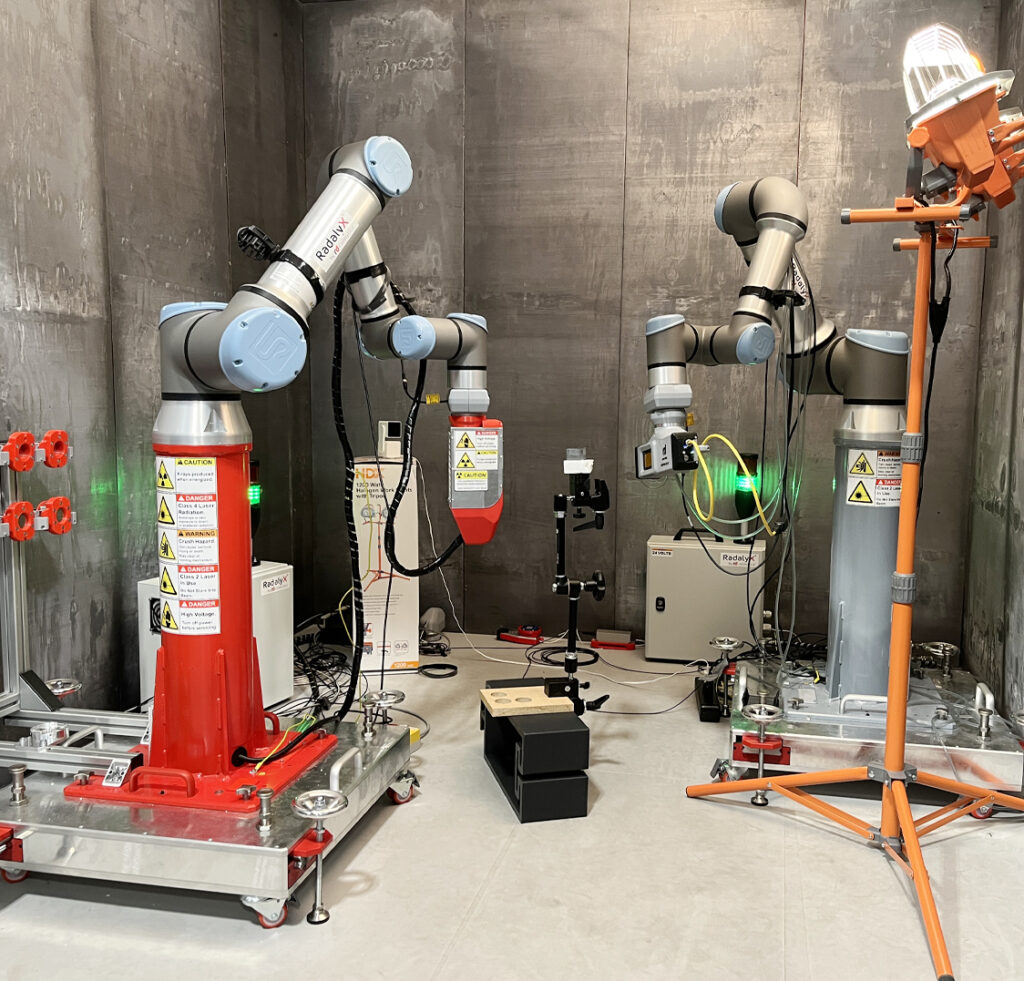
Instead of bringing the object to the scanner, we bring the scanner to the object. By combining robotic X-ray imaging with tomosynthesis, RadalyX changes the viewing angle and focuses on the exact depth where defects are expected, separating overlapping layers without requiring full CT acquisition.

We discovered pieces of cloth trapped inside composite aircraft wings that would have remained invisible using conventional inspection techniques. The same robotic flexibility even allows us to look underneath titanium or steel fasteners, revealing defects that conventional radiography cannot see.

Show more
Porosity

Rather than imaging the entire structure at once, RadalyX focuses the X-rays on the exact depth where defects are expected. Robotic X-ray imaging, combined with photon-counting detectors and adaptive scanning trajectories, separates overlapping structures and reveals fine porosity inside complex assemblies.

From aluminium castings and welded components to composite aircraft wings and honeycomb structures, RadalyX routinely uncovers manufacturing imperfections that conventional inspection methods struggle to resolve. Photon-counting detectors deliver exceptional dynamic range, making low-contrast voids visible even in components combining lightweight composites with dense metallic features. When only single-side access is available, robotic X-ray backscatter extends the inspection beyond transmission imaging, while ultrasound complements the assessment by detecting delamination and internal layer separation.

Show more

Missing adhesives/resin

Tomosynthesis separates overlapping structures by focusing the reconstruction on a selected depth plane. This allows RadalyX to inspect individual bonding interfaces, adhesive regions and honeycomb cores, revealing missing adhesive, insufficient resin and manufacturing irregularities without requiring full CT acquisition.

From bonded inserts to composite aircraft panels, RadalyX routinely uncovers hidden manufacturing imperfections inside multilayer assemblies. Ultrasound complements robotic X-ray inspection by identifying disbonds, delamination and layer separation where adhesive quality cannot be fully evaluated radiographically.

Show more

Gap measurement

Knowing that a gap exists is often not enough—you also need to know its size. RadalyX combines robotic X-ray imaging with backscatter to inspect joints, bonded interfaces and large composite structures directly in place. Unlike ultrasound, which indicates the presence of a gap, robotic X-ray backscatter estimates its size, providing quantitative information for structural assessment without requiring access from both sides.

Adaptive robotic scanning further enables inspection of large or installed components that cannot be evaluated using conventional CT.

Show more

Water ingression

Water detection is particularly important in aerospace because trapped moisture inside honeycomb structures can freeze at altitude and permanently damage the core. Instead of interpreting a single overlapping X-ray projection, RadalyX applies robotic tomosynthesis to focus on one skin, the honeycomb core and the opposite skin individually, making water-filled cells clearly distinguishable within the structure.

The scan shown here reveals water accumulated inside individual honeycomb cells, allowing inspectors to precisely localise the affected area and assess its extent without disassembling the component.

Large composite structures can be inspected directly in place, providing rapid, non-destructive assessment before moisture leads to permanent structural damage.

Show more

Reverse engineering

Sometimes you don't need a complete CT scan—you only need accurate information from the region that matters. RadalyX uses robotic X-ray imaging to acquire precisely targeted data from selected areas of complex components, reducing acquisition time while preserving dimensional accuracy.

By adapting the scanning trajectory to the inspected geometry, the system captures internal features that are difficult or impossible to access using conventional scanning systems. The resulting, fully scaled data provide a reliable foundation for dimensional analysis, digital reconstruction and reverse engineering, enabling accurate reconstruction of internal features without dismantling or damaging the object.

Show more

Crushed core in honeycomb

A conventional X-ray often shows a complex honeycomb panel as a single confusing projection. RadalyX transforms that image into something inspectors can actually interpret. By separating the composite skins from the honeycomb core, crushed cells become clearly distinguishable instead of being hidden among overlapping structures.

As demonstrated during real aircraft inspections, this significantly improves defect detectability and allows damaged core regions to be accurately localised without disassembling the structure.

Show more

Residual stress

Residual stress is often invisible until it affects performance, fatigue life or dimensional stability. RadalyX extends conventional inspection with X-ray diffraction (XRD), allowing residual stress to be evaluated directly inside manufactured components without destructive sectioning.

As demonstrated on welded structures, XRD clearly distinguishes material inside and outside the heat-affected zone, providing insight into stress distribution and structural changes that conventional radiography cannot reveal. It is a capability with "massive potential for all kinds of production applications."

Show more

Biggest players trust our technologies